About this blog

This is my secondary, extremely-seldomly updated blog about music.

Tuesday, January 18, 2011

The Loudness War: Is It Taking Music to Eleven?

The following is another essay I wrote for my rock history course, on the topic of the "loudness wars" phenomenon of modern music being mixed increasingly loudly.
Waveform of "The Song Remains the Same", by Led Zeppelin (1973)
In 2008, thrash metal pioneer Metallica released their long-awaited album Death Magnetic. Though it was received positively by fans and critics and praised as a return to the roots of the genre Metallica helped invent, the album was also plagued by criticisms surrounding its production. Under attack was the sound quality of the album, which was rife with audible distortion resulting from dynamic range compression—in short, the album was too “loud”. The situation of Death Magnetic is not unique; it is just a highly visible casualty of a war that has been raging in the music industry for decades: the so-called “loudness war”. This race to produce louder and louder recorded music is a troubling trend that threatens the quality of modern music.
Waveform of "Alive", by Pearl Jam (1991)
The urge to produce “loud” music has existed for almost as long as recorded music itself. Back in the days of vinyl, jukeboxes and radio stations would be set to play music as a preset volume. In this environment, a record that had been mastered “hotter” (louder) than the competition had a better chance of standing out and making a psychological impact on listeners. This created pressure to make louder records, though the nature of the medium prevented the music from getting too loud; records that were too loud had less room for music and could cause the needle to jump during playback.[1] In the 1960s and 70s, producer Phil Spector capitalized on the power of perceptually loud music with his “wall of sound” technique which layered the sound of many instruments playing together to produce a powerful, reverberant sound that reproduced well on jukeboxes.[2]
Waveform of "Boll Weevil", by the Presidents of the United States of America (1995)
The introduction of the audio CD and the advent of digital music created a vast new battlefield for the loudness wars. Digital music has a preset, unbreakable limit to the volume of a song; once this limit is reached, the only way to make music “louder” is to amplify the quiet parts of a song via dynamic range compression. As CDs became the standard medium for music, newly developing digital signal processing methods let producers make ever louder music.1
Waveform of "Bullets", by Creed (2001)
In dynamic range compression, the loudest parts of a song—the peaks, such as drum hits—are lowered in volume closer to the level of the rest of the music. The entire song is then amplified to its previous maximum level, resulting in an increase in uniform loudness and a decrease in dynamic range—the difference between the loudest and quietest parts of a song. In the early days of CDs, songs were typically mastered with their highest peaks at about six decibels below the maximum level the medium allowed, with the average level of loudness at around eighteen to twenty decibels below the maximum.1 Today, mixes can average as little as four decibels below the maximum, a huge decrease in dynamic range.[3]
Waveform of "Dimension", by Wolfmother (2005)
A visual example of this trend can be seen in the appendix. A song from the 1970s, while reaching the maximum allowed loudness due to being transferred to CD, nevertheless shows a wide distinction between loud and soft parts, with pronounced drum hits and a wide dynamic range. A song from the early 90s, while slightly louder, still has much of this dynamic range. In the mid 90s, we see evidence of dynamic range compression; while loud parts are still somewhat pronounced, on average the song is much closer to the maximum possible loudness. In the early 21st century, much of the song is quite loud, pushing the digital loudness limit with less distinction between loud/quiet. This becomes even more pronounced in a 2005 song. Then we see the waveform of a song from Death Magnetic, an album that brought the loudness wars to the forefront of music culture; the majority of the song is completely amplified up to the maximum. The waveform of a current pop song shows similar levels of dynamic range compression.
Waveform of "The Day That Never Comes", by Metallica (2008)
The escalation of dynamic range compression has taken a heavy toll on modern music. Removing the loud/soft contrast of music decreases its emotional power and can be fatiguing to listen to; ironically, if a song has no quiet parts, the impact of its loudness is lost. Increasingly, dynamic range compression also causes audible distortion in music as the peaks of sound waves are sheared off to fit into the maximum allowed digital volume. Peter Mew, senior mastering engineer at Abbey Road Studios, explains: “The brain is not geared to accept buzzing. The CDs induce a sense of fatigue in the listeners. It becomes psychologically tiring and almost impossible to listen to. This could be the reason why CD sales are in a slump.”[4] Squeezing a song into such a narrow dynamic range reduces the definition of the instruments and makes them harder to distinguish; what was once a loud, crisp drum hit disappears into the mix and its power is lost. Sometimes the pressure to fit all the instruments into one set level of volume can cause their volume to literally oscillate up and down with the beat, causing a very unpleasant listening experience.
Waveform of "Bad Romance", by Lady Gaga (2009)
Not everyone is content to sit back and listen as music becomes increasingly loud and distorted. Some sound engineers actively seek to resist the loudness trend in their work; Joe Lambert of Trutone says, “there’s nothing I do just to make a record louder.”3 Bob Hoffman, who remastered the Red Hot Chili Peppers album Stadium Arcadium for vinyl to provide greater dynamic range, refuses jobs that involve overcompressing music “at least once a week.”1 Others, like Bob Katz, look for ways to increase the perceived loudness of a track while minimizing distortion.1 Turn Me Up! Is a nonprofit organization that certifies music mixed to have a greater dynamic range, encouraging listeners to enjoy it by turning up the volume themselves.[5] An algorithm called Replay Gain analyzes songs and automatically adjusts their playback volume to give listeners a consistent level of loudness, negating the need for techniques like dynamic range compression to make music louder.1 Replay Gain and similar systems are being integrated into popular music players like iTunes and Winamp, though their use is far from universal. But despite the best efforts of sound engineers and other wellwishers, the outcome of the loudness wars depends largely on the listeners. Besides sound quality-conscious listeners like audiophiles, many consumers are content with loud music that they can hear over background noise in cars or on MP3 players. The noisy environments in which so much music is consumed today mean that many listeners are completely unaware of the creeping effects of dynamic range compression or even welcome them. Record companies wouldn’t continue to overcompress music if the average consumer didn’t demand it. Until overproduced, loud music stops being so profitable, we’re unlikely to see an end to the loudness war.

[1] Sreedhar, Suhas, “The Future of Music, Part One: Down the Wall of Noise,” IEEE Spectrum, August, 2007, http://spectrum.ieee.org/computing/software/the-future-of-music.
[2] Spector, Phil, “Phil Spector on MySpace,” MySpace, http://www.myspace.com/philspectorrr.
[3] Jones, Sarah, “The Big Squeeze,” Mix Magazine, December 1, 2005, http://mixonline.com/mag/audio_big_squeeze/.
[4] Sherwin, Adam, “Why music really is getting louder,” Times Online, June 4, 2007, http://entertainment.timesonline.co.uk/tol/arts_and_entertainment/music/article1878724.ece.
[5] “Who We Are,” Turn Me Up!, http://turnmeup.org/about_us.shtml.

Wednesday, January 12, 2011

Modern-Day Epics

It has been brought to my attention that apparently I can't share docs with just anyone via Google Docs, they need to log in and stuff. So, I am posting my essay on how epic Painkiller by Judas Priest is, linked to from my post on epic music, here:

Throughout history, people have enjoyed stories as means of understanding the world around them, or escaping to different ones. The culmination of the tradition of storytelling is the epic. Epics are stories on the largest possible scale: tales of great heroes, fierce battles, and larger-than-life adventures. They have been told in the form of poetry (such as Homer’s Odyssey and Iliad), literature (as in Tolkien’s The Lord of the Rings), or film (Ben-Hur). Increasingly, however, the relatively new art form of music has taken up the epic tradition.

One classic example of this is British heavy metal band Judas Priest’s Painkiller, from the 1990 album of the same name. The song begins fairly unusually with a fast-paced drum solo, unaccompanied by any other instrument. Packed with time signature changes and virtuosic precision, the solo establishes from the beginning that this is no ordinary heavy metal song—it’s something bigger, heavier, more powerful. Soon the guitar soars in and the bulk of the song begins. The verses are occupied by generally the same guitar riff—a sixteen-note pattern that seems to switch between three and two-note time, but stays in time with the rapid sixteenth notes of the bass and snare drums, which add a textural speed and urgency to the background of the whole song. Through it all, the instrumentation sounds huge; the heavily amplified and distorted guitar constantly resounds, creating a dense, thundering sonic atmosphere. From the start, the song sounds huge and of great importance.

The vocals follow a similar pattern. The lyrics of the song are about as fantastical and over-the-top as even metal gets, depicting the exceptionally violent and loud salvation of humanity by the godlike metal messiah, Painkiller. The setting is the final stand of mankind against an indescript evil force, certainly a familiar one for epics. The song is packed with superlatives; the Painkiller is described as “faster than a bullet”, “louder than an atom bomb”, and “brighter than a thousand suns”. Priest’s exceptionally talented vocalist Rob Halford considerably adds to the power of the song in his delivery of these lyrics, singing almost entirely in a screeching, yet melodic falsetto. Where other metal songs might use screamed vocals to add special emphasis to certain lines, Halford applies this technique to virtually the whole song. There is no poetic depth to uncover here; the message is clear: This is it. Everything hinges on this avatar of metal; all the chips are down; this is the final battle. Lyrics of lesser songs seem insignificant by comparison.

The intensity and drama never let up as the song unfolds. After a few verses and choruses introducing the dire state of the human race and the Painkiller, we get to a new, bridge-like section. Though the lyrical theme is similar, continuing to describe the fury of the Painkiller, the intensity of the song rises even further as the guitar and bass drum fire away at maximum speed and the last line of the vocals rises from the regular pitch we’ve been hearing to an impossibly high, held note. The guitar and snare drum begin playing, but constantly speed up. Just when we thought the song was beyond anything before it, it keeps becoming more, faster, higher, louder.

The purpose of all this is to build anticipation for the climax: the guitar solo. The increasingly rapid-fire notes of the bridge abruptly give way to incredibly quick guitar shredding. What follows is a solo to end all solos; loud, complex, and at nearly a minute and a half, incredibly long. Several times the main riff of the song is heard repeated in a higher key and with some variations before fading back into the solo. It’s about as over-the-top as metal got, and certainly the focal point of the song; after all, it represents the incredibly loud, powerful, and destructive battle of the Painkiller against the forces of evil.

Immediately after the solo ends, the main guitar riff resumes, along with the vocals. The battle is won; humanity is given hope once more and is free to rebuild from the devastation the Painkiller inadvertently incurred. After this the chorus repeats twice, with different lyrics further describing the metallic awesomeness of the Painkiller, after which we hear the quickening pre-chorus again. Instead of another solo, the guitar plays the main riff alone and in a lower key with occasional drum thrashing interspersed. On top of this is the chorus, but this time it’s sung more normally in an intensifying shout that soon builds back up into Halford’s falsetto screams. Just as they reach their height, we get the expected solo, albeit a much shorter one than before. As the solo fades away, Halford offers a final ultimatum: “Can’t stop the Painkiller,” holding the last syllable for nearly 20 seconds as the drums go wild with a solo that accelerates to seemingly impossible speeds.

All told, Painkiller is an extraordinary heavy metal song that extends the tradition of the epic into the musical realm. The apocalyptic story its lyrics tell lives up to the epics of old in scale, power, and weight, making even Priest’s other lyrics seem inconsequential by comparison. The bombastic guitars and bass-heavy drumming, blisteringly fast and virtuosic in musicianship, are similarly beyond that heard in other songs, even other metal songs. Everything is beyond the impossible; an impossibly long solo, impossibly fast drumming, Rob Halford’s impossible vocal skills. All of these elements and more would soon be adopted by power metal, a whole genre arguably devoted to the epic tradition in one way or another, but Painkiller is one of the songs that would define this sound. Film and literature continue to have their moments, but today music has become a consistent teller of epics.

Wednesday, November 24, 2010

DRAGONFORCE

WARNING: BIASED BLOGGING AHEAD

I realized the other day I've been forgetting a terribly important album in my reviews, one that's been dear to me for years:
Yeah. DragonForce, beeyotches.

Inhuman Rampage was the album that got me into not just DragonForce, not just power metal, but metal itself. Before I heard Through the Fire and the Flames via a preview of Guitar Hero III that mentioned how impossibly difficult it was, I mostly listened to Christian contemporary music, songs from Guitar Hero (some of which were metal, but I didn't even know that), and the soundtracks of video games that I piped into my computer and recorded. When I heard that song my life was changed.

Compared with the stuff I was used to, DragonForce was larger than life. Blindingly fast bass drumming and virtuosic guitar solos lasting upwards of three minutes (say what you will, but I believe they can play their own instruments when sober), epic multisectioned songs in excess of seven minutes, made-of-awesome lyrics like "So far away, we wait for the day/For the lives all so wasted and gone /We feel the pain of a lifetime lost in a thousand days /Through the fire and the flames we carry on!"...where had I been to be missing out on such music?

DragonForce is the musical embodiment of the rule of cool. Maybe a 30-second guitar solo would fit into the flow of the song better and make it a more reasonable length, but DragonForce, luckily, is not a reasonable band. Their lyrics are so epic that they don't even make any sense! As I mentioned in a previous post, DragonForce is sometimes described as "video game" metal for their use of 8-bit-esque electronic effects. So if you like '80s music or video games, this is the band for you!

That said, there isn't too much point doing a track-by-track analysis. I have long admitted that DragonForce's songs mostly sound similar. Similarly awesome. Since the shortest song on the album is over 5 minutes, there's a lot to love here. Through the Fire and the Flames is of course, the most memorable track for me due to its general greatness and inclusion in Guitar Hero III and Brütal Legend. If you only listen to one DragonForce song, let it be that one. The album's only weak point is its obligatory ballad (which really does sound forced compared to the insanity of the rest of the songs), Trail of Broken Hearts.

I usually tend to remember my introduction to something favorably; it gets a special place in my heart that later instances can't claim. Maybe that's why DragonForce remains my favorite metal band, or maybe it's because other power metal bands are slow, short-winded, and boring compared to them. If you're one of those types who listens to music to be cool, stay away from this album and go back to your Animal Collective or whatever. But if you listen to music to enjoy music, you'll be hard-pressed to find a more enjoyable listening experience than Inhuman Rampage.

Warning: May cause uncontrollable head-banging. Reviewer assumes no responsibility for DragonForce-related injuries.

Wintersun

Since this spring I've been developing an ear for death metal. I haven't discussed this fact much with people, knowing the knee-jerk reaction such an "extreme metal" genre usually evokes. It's not music if there's no singing, right? And aren't the lyrics all Satanic and gory, not at all the stuff a Christian should listen to? Let me examine these assumptions with the experience I have with the genre:

The music: In comparison with my beloved power metal, death metal tends to be at least as fast, with heavier-sounding guitars that are more often played in minor keys. It is very riff-focused and often has furious guitar solos. The drumming has lots of bass pedal and "blast beats" (2-time beats involving the bass drum, snare drum, and a cymbal that are usually played extremely quickly). It's a very technically demanding genre. And, of course, the vocals are usually shouted, snarled, screamed, or grunted rather than sung.

There's no questioning that usually these elements are acquired musical tastes (in the same way that people tell me alcohol is an acquired taste). Someone who isn't already into metal is much less likely to love a Dark Tranquillity album for the first time as he is a HammerFall album. Personally, I prefer melodic death metal, which has at least as much in common with the New Wave of British Heavy Metal (think Iron Maiden, epic fantasy-themed lyrics, melodic guitar harmonies, and the like) as it does with '80s thrash. At its most melodic, it's basically power metal minus the clean vocals. (Though it can have quite a bit of clean vocals) It's powerful, epic, and even beautiful. At any rate, there's nothing "bad" or "wrong" about the musical style of death metal, as abrasive as it can be. I believe that preferred style of music (without considering lyrics) is simply a matter of taste, not of morality.

But what about the lyrics? It's true that the Satanic and gory themes people usually associate with death metal characterized it in the beginning. But like so many other genres (punk, grunge, even rock itself), the style outgrew the original culture that defined it and was responsible for its early lyrics. Namely, it grew its way to Scandanavia, where bands like At the Gates and In Flames redefined it and created melodic death metal. As I said above, it was considerably more melodic and accessible than the 'brutal' death metal that was on the rise in America. I enjoy it much more. Additionally, the lyrics were much less nasty and more diverse. The only common feature of melodic death metal lyrics I've identified is that they tend to be dark in tone, but this doesn't stop them from being enjoyable, deep, even beautiful. (See Opeth) Case in point: an album I've been getting into recently...
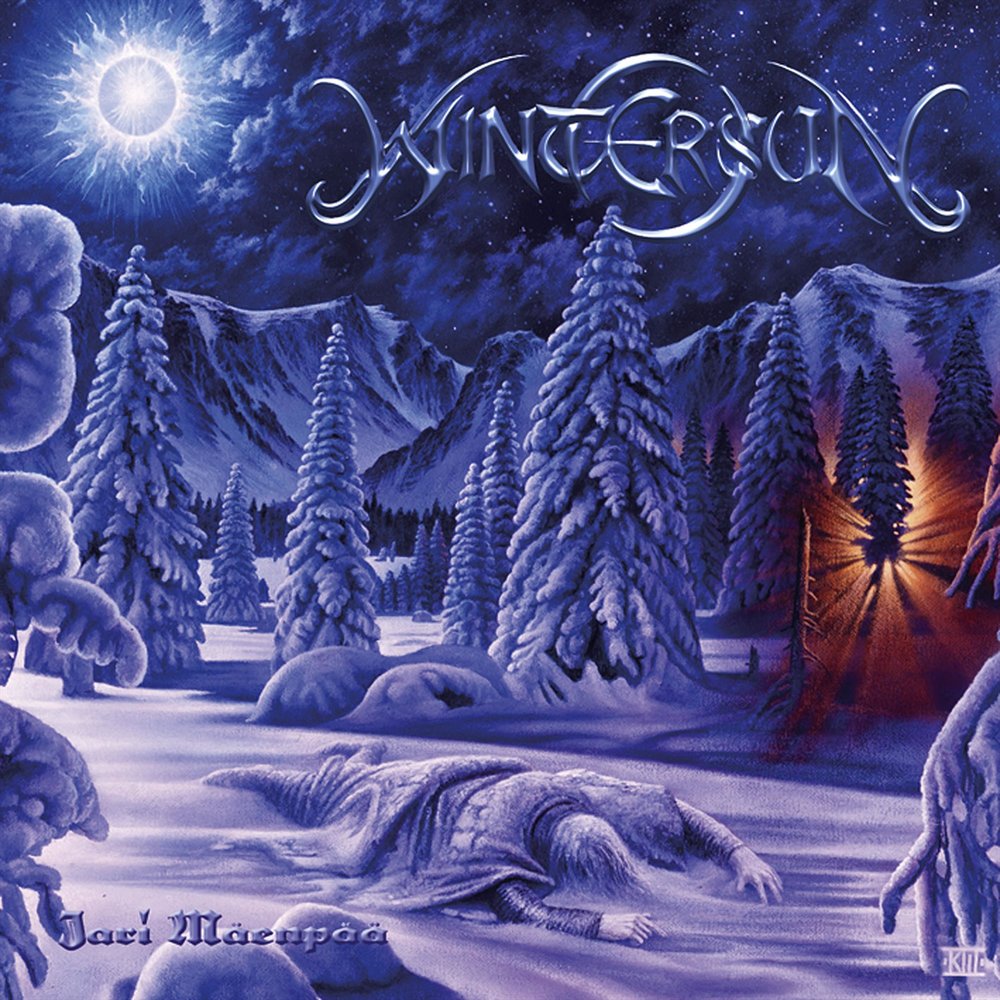
Wintersun is the band of former Ensiferum vocalist Jari Mäenpää (don't you love awesome Finnish names?). The lyrics are quite poetic and, rather predictably, often about winter. (I might be biased toward them because of this) Musically, it is mostly fast and furious, with melodic guitars akin to a fiercer brand of power metal plus plenty of blast beats. The keyboards give it a distinctive expansive, "spacy" sound that evokes the feel of a winter night (again, the perfect album for someone whose favorite season is winter). It's also nearly unique in my iTunes library in that every song on the album is longer than the last. It's a cool effect as you feel like you're going deeper and deeper into the album--and this is a very deep album. Each song (except maybe the two-and-a-half-minute opener) has many sections to it and this album is as deep as many a prog album. A sign of a good album is that I enjoy it more every time I listen to it, which is certainly the case for Wintersun.

Lyrically, the songs appear to follow the last thoughts of a man lost in a winter night struggling against the cold and his own delusions, but they are intentionally open to interpretation. They are poetically penned in the trademark nearly-correct-so-it-sounds-cooler style of many Finnish metal bands. The album has a mix of operatic clean vocals and screams; overall Jari is talented and understandable whatever style he's using.

The album starts off with the one-two punch of Beyond the Dark Sun and Winter Madness which introduce us to the band's frantic tempos, superb guitar and keyboard melodies, and top-notch drumming. This is a band that isn't afraid to sound big, all while keeping up the pace. They slow down to a crawl for the first part of Sleeping Stars while the atmospheric keyboards take over, but after that we have one of the album standouts, Battle Against Time, which has some truly awesome tempo shifts. Keep in mind that the farther into the album we get, the more progressive the songs become.

Death and the Healing is a largely instrumental track devoid of screamed vocals, probably the most beautiful song on the album. Starchild is an epic journey both lyrically and musically. Beautiful Death is a furious 8-minute musical attack that ends with a pretty cool ambient section. Album finisher Sadness and Hate provides a satisfyingly epic conclusion to this majestic album. If you're looking for some metal that defies genre boundaries and provides a satisfying listen for the head and the ears, I highly recommend Wintersun.

Friday, November 19, 2010

define:Epic

I take pride in the fact that I don't just listen to music: I listen to EPIC music. Music that would be appropriate for a lightsaber duel, Tolkienesque battle between good and evil for the fate of the world, or a particularly intense homework session. My definition of epic music was formed years ago by some particularly awesome music I discovered in my younger, more musically impressionable years and reinforced by some more recent gems. I decided to select the CD's worth of songs that best fit this abstract definition--I measure how epic a song is largely by how closely it resembles the following and how well it fits the above situations. If you listen to none of the other posts in my blog, check these songs out. They are made of epic awesomeness.

The first song I hear by an artist makes a strong impression on me and often ends up being one of my favorites in their catalogue. This 14-minute masterpiece was the first I ever heard of Nightwish (aside from that misheard lyrics video which is the most almost anyone hears of them) and it completely blew me away. It, like all the other songs on Nightwish's latest albums, was recorded with a full orchestra. The intrigue steadily builds with the largely ambient orchestral intro for the first minute before the trumpets come in and the band explodes onto the scene. The metal guitar, horns, and choir trade off in a crowning moment of EPIC. This song resembles film music (a favorite of Nightwish's resident keyboardist/composer, Tuomas) in its scale and complexity. There are quite a few quiet parts, a nice contrast that makes the song even more memorable. The version with lyrics is also cool (it's basically Tuomas's life story plus Poe references), but the instrumental version lets you concentrate solely on how INSANELY EPIC the music is.

This song also starts off quietly and ambiently before a lonely organ comes in above the wind to play a few notes. The band begins repeating the song's all-Latin chorus louder and louder--it means something like "The book is written, the book shall be brought, in which all is contained, by which the world will be judged". Pretty epic. The choir and organ back singer Fabio Lione up for this part for EVEN MORE EPIC. Bonus points for some awesome shred guitar. Check it out.

INTO THE FIRES OF FOREVER/WE WILL FLY THROUGH THE HEAVENS/WITH THE POWER OF THE UNIVERSE/WE STAND STRONG TOGETHER/THROUGH THE FORCING OF POWER/IT WILL SOON REACH THE HOUR/FOR VICTORY WE RIDE/FURY OF THE STORM/[2-minute hyperfast guitar solo]

At only ten minutes, Ghost Love Score is a disappointing follow-up to The Poet and the Pendulum. Not. Actually it is not disappointing at all and was released three years earlier. Like its longer nephew (sorry, learned about binary trees today) it resembles film music, with loud parts, quiet parts, and (plenty of) epic parts. Go to 7:10 on that video and you'll see what I mean. Only one thing could make it more epic...

I traditionally listen to this song after taking tests. Once again the the shredding guitar, fast drumming, and symphonic/choral elements combine to make one seriously epic song. Particularly the incredibly sing-alongable chorus. "Gloria/Gloria perpetua/In this dawn of victory!"

I have written a three-page essay on this song and why it is epic. And the metal gods manage it with no keyboards!

This song is from the same album as The Poet and the Pendulum, but it is considerably more guitar-focused. It has great riffs and an intense, uber-heavy atmosphere. The chorus (or what would be the chorus in the non-instrumental) version currently has no movie that could possibly do it justice as a soundtrack.

I don't know of any band that can so seamlessly blend shred guitar and organs/harpsichords and not have it come off as ridiculous like Rhapsody of Fire. Well, maybe it is ridiculous. But that's just part of their charm!

As I've previously written, Dream Evil is known for taking power metal to self-parodic levels, but try not to sing along with the awesome chorus. Just try. One of the more awesome guitar riffs I've ever heard as well. Bonus points for the lyrics actually being about an epic final battle.

Yes, a quarter of my definition of epic is from one album. One awesome album. This song starts out slower, with deep, pounding guitar and a choir maintaining an ominous atmosphere. After a few "verses" this gives way to a tribal-sounding drum march, then a violin solo--epic indeed! The last minute and a half are possibly the most intense piece of music I have ever heard--just when you think it's about to end, they turn it up a notch.

The first 1.5 minutes of this song are relatively quiet before the Italian bards turn it up to 11. The swirling strings, the choir, the surge of energy in the chorus--words can't describe it. I recommend listening.

The last song on my (to be) CD is the only one by an American band. (Don't worry, they have a Norwegian opera singer for a vocalist) No relation to Ghost Love Score aside from their epic blend of metal and orchestra. I'm running out of words to use, but you should probably listen to it.

Addendum: In the updated version of this playlist, I've replaced "Agony Is My Name" with Wurzelbert, but German symphonic metal band Equilibrium. After listening to the first minute or so, it pretty much sounds like the world is ending. Booming guitars combine with symphonic bombast, all turned up to eleven. The all-German vocals sound so evil, but really they're about a funny root-man who thrills people by playing his fiddle ("Wurzelbert,, Wurzelbert, Wurzelbert, spiel die fiedal!"). Wow.

Thursday, November 11, 2010

In the Night

The following is a review I posted on iTunes about one of my favorite metal albums.

Meta-Metal

For those who aren't aware, Dream Evil is the band of Mr. Fredrik Nordstrom, Swedish metal producer and one of the main guys behind the famed "Gothenburg sound" of metal. This is a guy that knows his metal, and Dream Evil is some of the finest new metal out there. If you don't read the rest of this review, use the time you saved to buy this album!

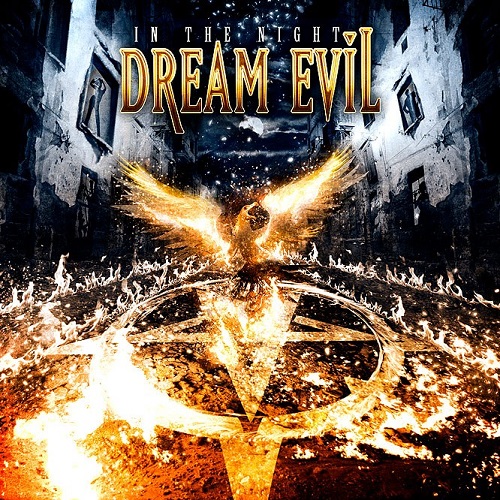
In the Night is the band's fifth release, in which they ply their craft of affectionately parodying power metal. DE is fully aware of how formulaic, cheesy, and self-promoting the genre can be, and they aren't afraid to poke some fun at it. This manifests through just-a-little-over-the-top lyrics like "I am immortal/I rule the slaughter" on the first track, "We will unite/Hail metal!/We will fight!/[BOOMING GUITAR RIFFAGE]" on the title track, or pretty much the entirety of "Bang Your Head". "The Ballad" gets bonus points for taking the classic metal song format to side-splittingly hilarious lengths. Make no mistake, Dream Evil isn't just joking around, and the lyrics are much more likely to delight than anger power metal fans. 

Musically, the band sounds top-notch. With the band led by one of the top metal producers in the business, this isn't too surprising. The booming guitars are mixed a little loud, but in power metal is this something to complain about? Every song has ultra-heavy, melodic guitar work, excellent solos, head-banging drumming, and fine vocals by Niklas Isfeldt/Nick Night. Whether you have lengthy debates over which Helloween album is best or you got into power metal via DragonForce and think they're the coolest thing ever, whatever kind of metalhead you are (or even if you aren't), this album is highly recommended.

Saturday, November 6, 2010

My Top 10 Eclectic Metal Bands

It's true that lots of the music I listen to, while awesome, and fulfilling, isn't terribly creative. Don't get me wrong, I love listening to epic metal about swords and sorcery, but occasionally I yearn for something a little different. Fortunately, in my musical travels I've found some fascinating metal bands that aren't afraid to do things differently. And now I share them with you: the ten most eclectic metal bands in my library and what they have to bring to the genre.

10. Ayreon - Science fiction rock opera
I've already done a post on these guys. Dutch multi-instrumentalist/composer/genius Arjen Anthony Lucassen could have simply formed an awesome progressive metal band, but he was far too megalomaniacal for that. Instead he started the project Ayreon. Armed with some of the best progressive and metal vocalists and musicians out there, he set out to tell the story of an ancient race of fish-people (the Forevers) that covered their world in machines and lost their emotions in the process. With their own future looking bleak, they seeded a passing comet with engineered DNA and guided it towards the Earth, where it wiped out the dinosaurs and paved the way for human life. The Forevers sought to live vicariously through the humans and, by learning from them, rediscover emotions. Soon human civilization began repeating the Forevers' mistakes and tries to warn past humans about their doom through a process called "time telepathy". Their message is received in a dream by the blind 6th-century minstrel, Ayreon, who is cursed to become unable to communicate his message by a jealous Merlin. The scientists also try to warn an aging hippie via time telepathy, but of course he is declared insane. Ultimately humanity wipes itself out in the year 2084. The last human left alive is a colonist left alone on Mars, who uses a machine called the Dream Sequencer to relive the history of his past lives. He eventually tries to go back to the very first soul created, the Universal Migrator, which travels through the universe spreading life to other planets. The Dream Sequencer eventually runs down and fails, killing the colonist, who becomes the new Migrator. Got all that?

This epic tale is told in full rock opera style, supplemented with 70s-era synthesizers for that "space" feel. Ayreon is truly larger than life in every respect.

9. Canvas Solaris - Ph.D.-level riffs (and song titles)
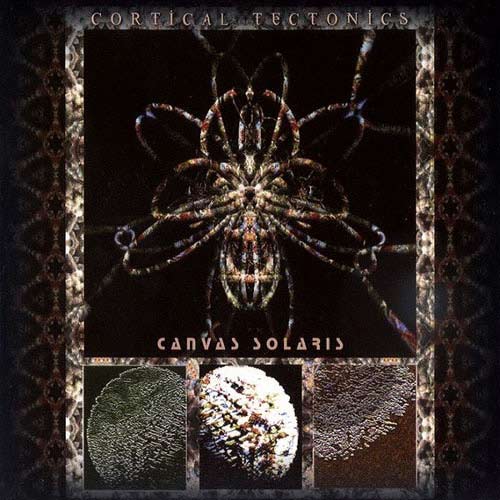
Canvas Solaris is definitely a band for the brainy. They play technically complex instrumental metal that reminds me of a lengthy process of introspection, decision, and discovery. Musically, it's an odyssey from quiet synthesizers to schizophrenic riffage that can be challenging to keep up with. Their songs definitely don't all sound the same--different parts of the same songs don't even sound similar. And, of course, even brainier than their music is their song titles. Perhaps in absence of lyrics to write, the band comes up with gems like "Reticular Consciousness", "Syzygial Epiphany", "Adaptive Optics", and the classic "Dark Matter, Accretion Disk, And Interacting Binary Neutron Star In A Self-Reproducing Inflationary Universe". One has to wonder how much they care about becoming a hit if their song titles are too long to remember, much less rave about. They're pretty awesome.

8. The Black Mages - Final Fantasy
DragonForce has been called "video game metal" for their awesometastic lyrics and electronic effects, but their have nothing on these guys. The band was started by their keyboardist, Nobuo Uematsu. You know, the guy who composes the music for Final Fantasy. The band is instrumental  and plays metal arrangements of classic tunes from classic video games. Also a truly epic rendition of Sephiroth's theme from Final Fantasy VII, One-Winged Angel, for the Final Fantasy movie. Sadly they disbanded earlier this year, but you should definitely check out their fascinating and nerdy music.


7. Rhapsody of Fire - Dungeons and Dragons, a full orchestra, and Christopher Lee
Wait a second, didn't I originally contrast all this eclectic metal with stuff about swords and sorcery? And isn't that exactly what Rhapsody of Fire sings about? Yes, it's true. But unlike other (perfectly good) power metal bands that just play metal and sing about fantasy, Rhapsody of Fire takes the two to their logical conclusion and fuses them perfectly. Perhaps the only band that would be more at home in the tales it weaves is Blind Guardian. RoF takes power metal's virtuosity and adds full orchestral arrangements, truly operatic singing, and epic choirs singing in Latin. They use this bombastic style to tell Dragonlance-ready stories that span multiple albums in complexity. Oh, and they routinely bring Sir Christopher Lee on board to narrate (and occasionally sing).

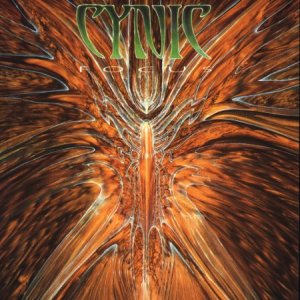
6. Cynic - Jazz
Cynic is technical metal like Canvas Solaris, but they have vocals--namely a mix of death growls and auto-tuned robots. They also incorporate elements of jazz into their rambling songs. Probably one of the most brilliant bands I've heard. They have released one album in 1993 and another in 2008, and both have been hailed as some of the best progressive metal has to offer. I don't have much more to say, except check them out.


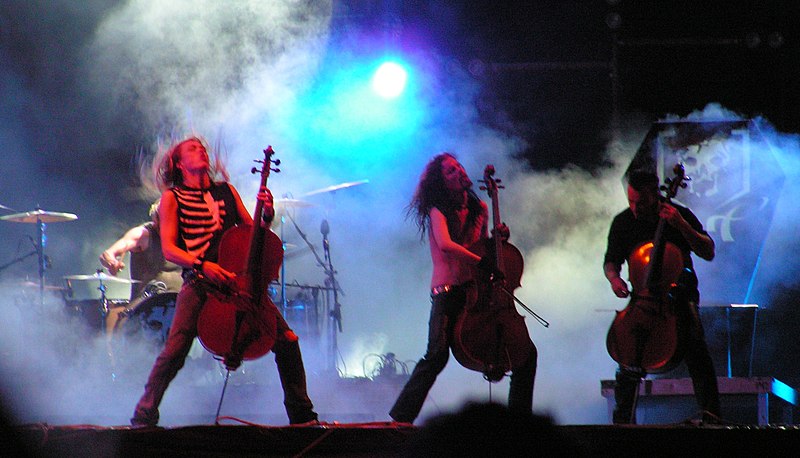
5. Apocalyptica - Cellos
You may have heard of Apocalyptica as that band that plays Metallica covers on the cello. That was how they got their start, along with covering  some other classic metal songs. Then they got a drummer and became a pretty awesome metal band in their own right. There's just something about a cello run through an amp that no guitar can match. Most of their songs are instrumental, but they regularly bring in guest vocalists to sing with them. Old or new, they're one of the most innovative acts in metal.

4. Pain of Salvation - Everything and the kitchen sink
Swedish prog metal band Pain of Salvation is pretty unique in that they truly have no distinctive "sound". All the other bands on this list have a certain style that their work falls under, but Pain of Salvation truly goes all over the map. Their last three albums have been a largely ambient/electronic concept album on the existence of God with all Latin song titles, a reflection on the human condition in an eccentric style bordering on rap metal, and a jam-filled retro-rock album that wouldn't have been out of place in the 70s. The perfect band for those tired of the ordinary.

3. Attack Attack! - Auto tune and electronica
Okay, maybe Attack Attack! isn't that creative. They are, however, hilarious. Where else will you find head-banging screamo metal and electronic dance pop in the same song? Your reaction to that video should be horror followed by stunned disbelief followed by uproarious laughter. (Especially in the last 50 seconds)


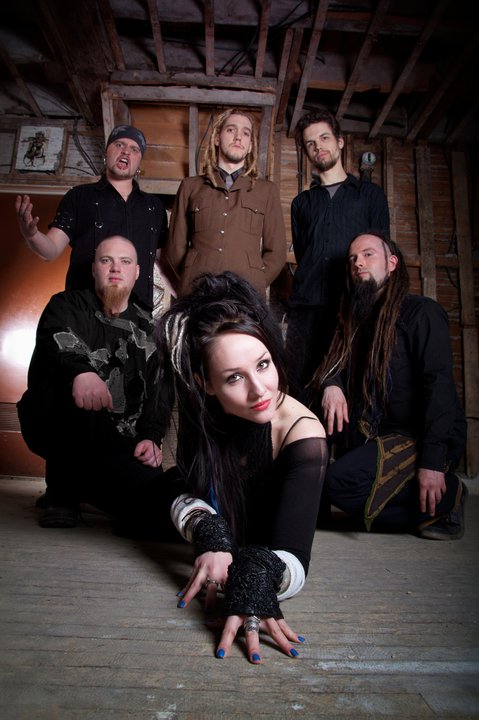
2. Unexpect - Insanity
I consider Unexpect the musical definition of insanity: the aural representation of what losing your mind must be like. Their music shifts between just about every imaginable style, tempo, key, and mood. The band members all go by XBox Live-like pseudonyms like Syriak, ChaotH, and Leïlindel and write lyrics like "Perpendicular euphoria/Burst! Feverish coloured bubbles!!!/Blotch this predictable boring mindscape". That stanza pretty much sums them up. This band is completely bonkers. Listen at your own peril.


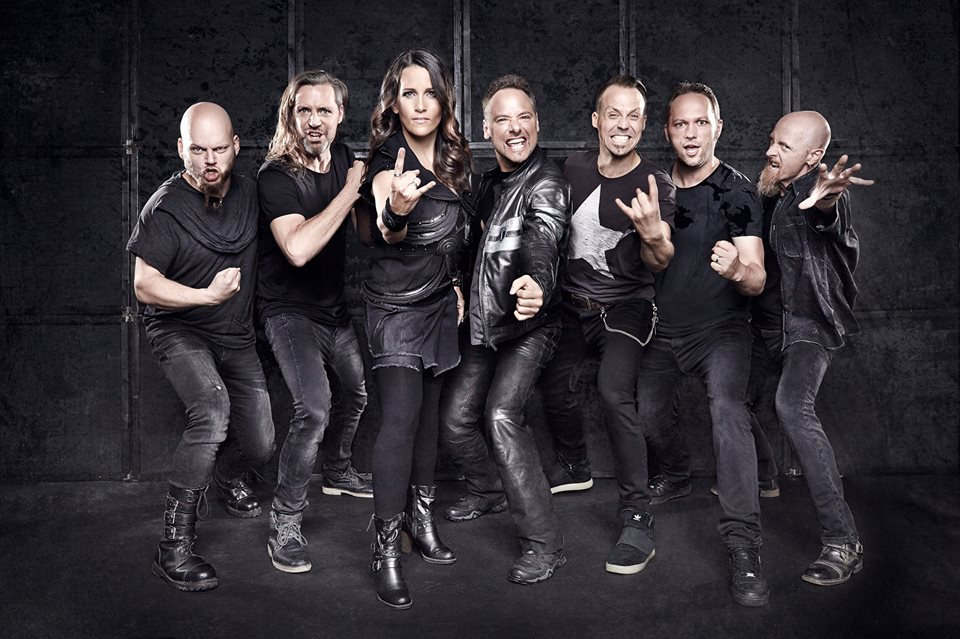
1. van Canto - A cappella
What could be more eclectic than a metal band with no guitars, you ask? A metal band with no instruments--an a cappella hero metal band!! To be fair, they do have a real drummer--but only because no one auditioning could imitate double bass drumming without passing out. (I think they should have just gotten two "drummers" to trade off) They have the drummer and five vocalists--two to actually sing the lyrics, and three more to imitate the guitars and bass with gratuitous amounts of "rakkatakka" and "dundundundundun". They pass the voices through amps to better imitate the real instruments; the solos on their newest album sound indistinguishable from a real guitar. It's pretty impressive. Don't just take my word for it; listening is believing.